

In November 2021, Pod Point floated on the London Stock Exchange at a valuation of £352 million. Less than four years later, its largest shareholder agreed to buy the whole company for £10.6 million.
That is a fall of about 97%, and it happened to a company that ended 2024 with more than 257,000 chargepoints communicating on its network.
So how does Pod make money, and why wasn't a network that big enough to save it? We worked through the company's own filings to answer it.
What Is Pod (Formerly Pod Point)? The Company Behind Britain's EV Chargers
Pod is the London-based EV charging company formerly called Pod Point, founded in 2009 by Erik Fairbairn and Peter Hiscocks and now wholly owned by EDF.
Fairbairn had already built and sold a luxury car-sharing venture in 2008 before he turned to the question of where electric cars would charge. The company rebranded to Pod in May 2025, and its chargers keep the Pod Point name.
At the end of 2024 it had more than 257,000 chargepoints communicating on its network, which it describes as the largest installed network in the UK.
How Does Pod Make Money?
Pod makes money by selling and installing chargers, charging network fees, running a Tesco charger network, selling grid flexibility and, since May 2025, home charging subscriptions.
In 2024 the company reported revenue of £52.9 million, down 17% from £63.8 million. Here is where it came from.
Recurring income, including Energy Flex, came to £3.7 million. Most revenue still came from selling and installing chargers, which is the Pod Point business model in one view.
Home Charging: Selling Hardware and Installation
Pod earns most from homes: UK Home brought in £22.3 million in 2024, or 42% of revenue, by selling smart chargers and installing them.
Customers arrive through Pod's website, through referral deals with carmakers including BMW, Mercedes, Nissan, Mazda, Jaguar Land Rover and Honda, and through fleet companies.
It was also the segment that hurt.
Pod installed 27,370 home chargers in 2024, down from 33,513, and Home revenue fell from £27.0 million to £22.3 million. The annual report points to weak private EV demand and to buyers moving towards fleet and energy-tariff channels, where Pod has historically been weaker.
Home gross margin dropped from 28.1% to 20.4%, which the company linked to higher installation costs and to extended warranties it now provides free.
Pod's answer included a charger-and-tariff bundle with EDF, which accounted for 10% of its leads.
The Pod Drive Subscription Model: Selling a Service Instead of a Charger
Pod Drive is a 36-month subscription that bundles a charger, installation and a service guarantee into a monthly fee instead of a four-figure upfront bill.
It launched in May 2025 and cut the upfront cost of a home charger from £1,249 to £99, with a £40 monthly fee and cashback on up to 7,500 smart-charged miles a year. As of November 2026, Pod's website lists £99 upfront and £34 a month for 36 months, or £999 to buy outright with standard installation.
So how does Pod make money from a subscription?
Customers pay the monthly fee to Pod directly, and Pod says the charger stays with the customer when the term ends.
We think the Pod Drive subscription model is the clearest sign of where the business wants to go. Pod's annual report describes a shift from selling chargers to selling charging services.
Pod has not published Pod Drive subscriber numbers or revenue, so its financial effect is still unknown.
Commercial and Public Charging: Workplaces, Destinations and the Network
Pod earns from businesses through charger sales, installation, ongoing network fees and a share of revenue from some customer-owned chargepoints, plus media and electricity income from chargers it owns at Tesco sites.
UK Commercial revenue fell 34% to £15.3 million in 2024 because Pod chose to exit fleet depot, public charging, destination and multi-tenancy work and focus on workplaces. UK Distribution grew to £7.1 million, selling chargers to housebuilders such as Barratt Redrow, Bellway and Taylor Wimpey, and to wholesalers.
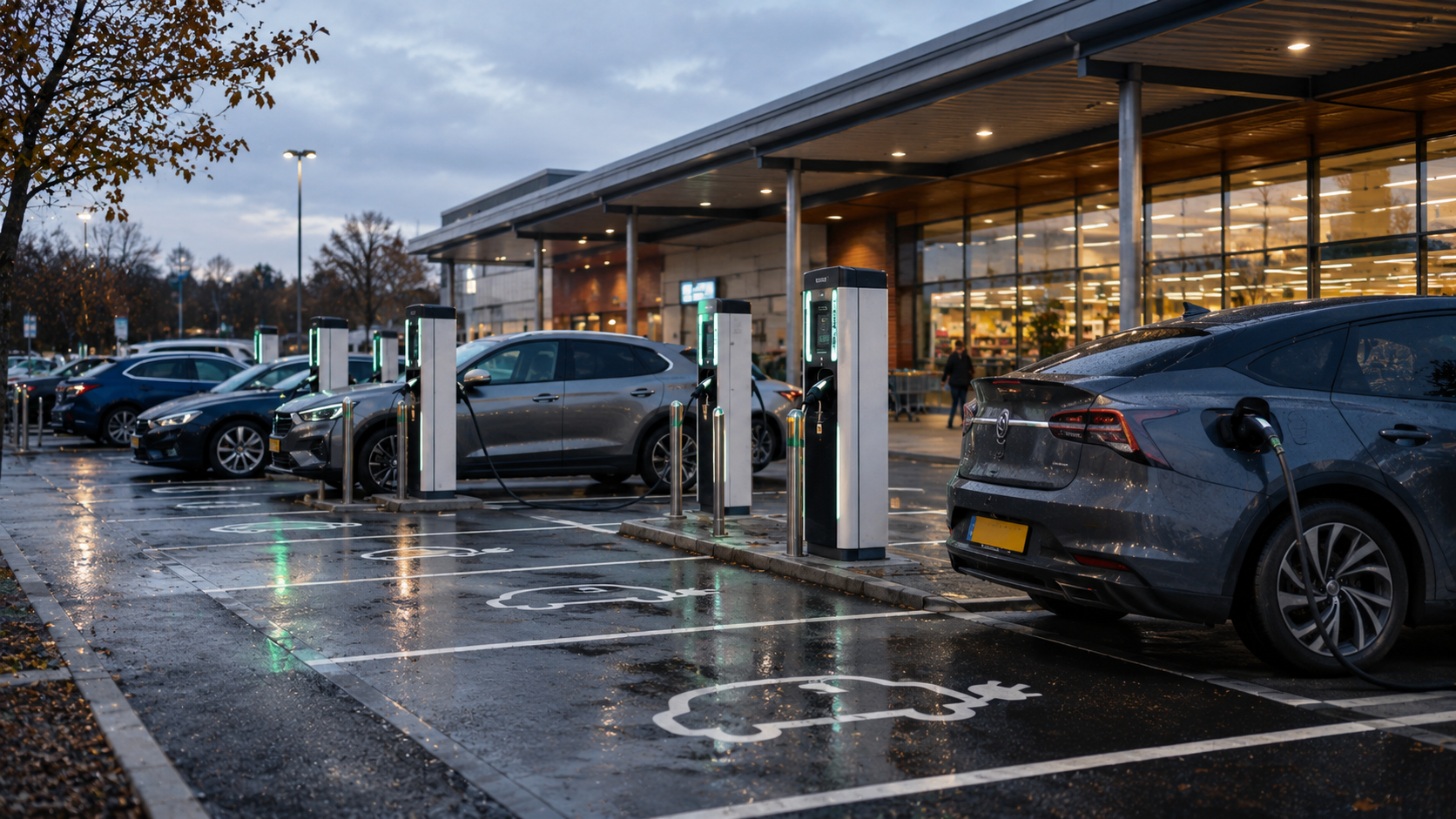
The Tesco network is the public face of the company. Pod owns the chargers at 598 sites and earns media fees and an electricity tariff, worth £7.7 million in 2024. The company calls it profitable but no longer a strategic priority, and media fee income falls over the seven-year contract.
Energy Flex: Getting Paid to Shift Demand on the Grid
Energy Flex pays Pod for moving when its chargers draw power, and it brought in £607,000 in 2024, about 1% of group revenue.
Revenue came from local grid flexibility schemes, the capacity market and Pod's first sales into the wholesale market, which Pod says made it the first company to trade energy under the new P415 rules in December 2024.
Revenue was 15 times the £39,000 of 2023, and the segment carries a 100% gross margin.
Pod Energy Flex is small, but it is the part of the business that gets better as the network grows, because every connected charger adds capacity to sell. Pod delivered 936 MWh of flexible energy in 2024, up from 111 MWh in 2023.
The Pod Point Business Model Under Pressure: Why Scale Didn't Mean Profit
Pod Point lost £20.7 million at the adjusted EBITDA level in 2024, and EDF says the company was cash flow negative throughout its history.
Revenue fell from £71.4 million in 2022 to £63.8 million in 2023 and £52.9 million in 2024. Loss before tax was £84.5 million, including a £44.4 million non-cash impairment. Operating cash outflow rose to £31.2 million from £12.8 million, and the company set aside £4.4 million for debts it was no longer sure of collecting, some dating back to 2020.
Year-end cash dropped from £48.7 million to £5.2 million.
EDF's £30 million credit facility covered the gap, with £15 million drawn in January 2025, and the directors flagged a material uncertainty over going concern.
The founder was gone by then.
Fairbairn stepped down as chief executive in July 2023 to allow for new leadership, and Andy Palmer took over as interim chief executive.
Melanie Lane became permanent chief executive in 2024.
From IPO to EDF Takeover
EDF's offer valued the whole of Pod Point at £10.6 million in June 2025, against the £352 million it carried at its November 2021 flotation.
The shares priced at 225p in 2021 and raised £100 million.
EDF had already taken a majority stake in 2020 through a joint venture with Legal & General Capital, whose own stake rose from 13% to 23%.
The 2025 offer was 6.5p a share, a 24% premium to the 5.24p closing price on 23 April 2025, with EDF already holding 53% (EDF offer announcement). EDF said the deal gave shareholders certainty in cash, and that Pod Point had relied on grants and EDF's support.
The takeover completed on 4 August 2025 and Pod was delisted the same day.
EDF said it would use the deal to roll out Pod Drive.
What Founders Can Learn From Pod Point's Story
Pod's story suggests a large hardware network still needs recurring revenue to carry it, and the company spent 2024 and 2025 trying to build exactly that. We think three lessons stand out:
- Demand concentration is risky: Home revenue fell from £41.4 million in 2022 to £22.3 million in 2024 as private EV sales weakened.
- Recurring revenue takes time: Energy Flex was 1% of revenue in 2024 and Pod Drive only launched in 2025.
- Cash discipline matters early: A £4.4 million bad debt provision and a cash balance that fell by £43.5 million in a year left little room.
If you are asking how does Pod make money today, the honest answer is still mostly through hardware, with a subscription bet underway.
FAQs
1. Is Pod Point owned by EDF?
Yes, EDF completed its acquisition of Pod Point Group Holdings in August 2025, and the company was delisted from the London Stock Exchange on 4 August 2025. EDF had held a majority stake since 2020 and owned 53% before the takeover.
2. How much does Pod Drive cost?
As of November 2026, Pod Drive costs £99 upfront and £34 a month for 36 months, according to Pod's website. Buying a charger outright with standard installation costs £999. Pod launched the subscription at £40 a month in May 2025, so check the live price before signing up.
3. Is Pod Point profitable?
No, Pod Point reported an adjusted EBITDA loss of £20.7 million for 2024 and a £84.5 million loss before tax, including a £44.4 million non-cash impairment (Pod Point Annual Report 2024). EDF said the company had been cash flow negative throughout its history. Full-year results after 2024 were not available at the time of writing.
Also Read: Who Is Still Raising Money From Venture Capital Trusts After the Tax Relief Cut?
Sources: Pod Point Annual Report and Accounts 2024 and FY2024 results (June 2025); Pod Point FY2023 results; EDF recommended offer announcement and Pod Point scheme announcements (June to August 2025); EDF and Legal & General press releases (February 2020); Pod and EDF press releases on Pod Drive (2025 and 2026); Pod's website (November 2026); Dow Jones (November 2021); Cambridge Judge Business School. Figures reflect the most recent published data at the time of writing.
The EP+ Editorial Desk covers UK startups, founder stories, and venture capital. All editorial content is independently produced and human-reviewed before publication.


