

Two schemes, one sequence - get it wrong and you permanently close off funding options that cannot be reopened.
If you're raising early-stage capital in the UK, understanding SEIS vs EIS isn't optional; it's the difference between attracting investors easily and struggling to compete with startups that have structured their rounds correctly.
Both schemes offer powerful tax incentives, but they target different stages, company sizes, and investor appetites. This guide breaks down how SEIS vs EIS compares in 2026, what changed in April, and how founders can sequence both schemes to maximise their raise.
SEIS vs EIS at a Glance
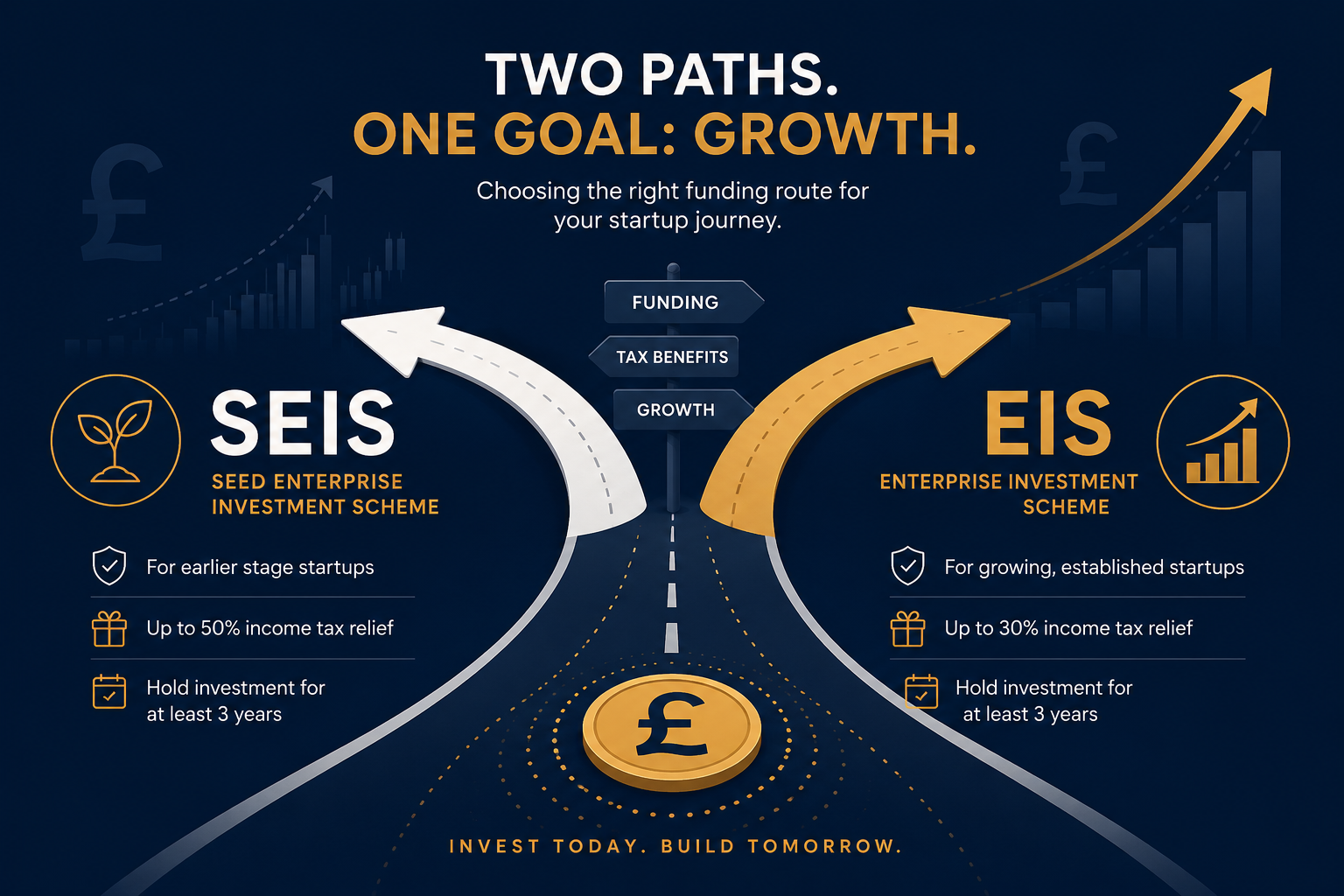
SEIS (Seed Enterprise Investment Scheme) gives investors 50% income tax relief on up to £200,000 per year and targets very early-stage companies. EIS (Enterprise Investment Scheme) offers 30% relief on up to £1 million per year and suits more established growth businesses. Both exempt investors from Capital Gains Tax on profitable exits after a three-year hold but the eligibility rules, company limits, and investor reliefs differ significantly.
The April 2026 Finance Act doubled several key EIS thresholds. SEIS limits were left unchanged.
SEIS Tax Relief 2026: Limits and What Investors Get
Investors putting money into a SEIS-qualifying company get 50% income tax relief on up to £200,000 per tax year on a £100,000 investment, that's £50,000 directly off their income tax bill, reducing their effective cost to £50,000 before any return. If shares are held for three years and the company succeeds, any gain is completely CGT-free. If it fails, loss relief applies against income tax or capital gains, reducing the real downside further.
The CGT reinvestment relief is one of SEIS tax relief 2026's most valuable features. If an investor reinvests proceeds from selling another asset property, shares, a business into a qualifying SEIS company, 50% of the CGT due is permanently exempt. Not deferred. Gone.
Put £50,000 in, your net cost after income tax relief is £25,000. If the startup fails entirely, stacked loss relief can bring the real loss down to around £11,250 depending on marginal rate. For investors regularly realising gains elsewhere, this combination makes seed-stage investing far more viable than the headline risk suggests.
Unlike EIS, directors of a company can invest under SEIS, a meaningful distinction for founder-led rounds. For founders comparing both schemes, SEIS tax relief 2026 remains the stronger option at the earliest stage precisely because of this flexibility.
EIS Explained UK: Limits, Reliefs, and the 2026 Changes
EIS income tax relief is a direct reduction of your UK tax bill, not a deduction from taxable income. Invest £100,000 into a qualifying company and you claim £30,000 off your income tax liability for that year, but only up to what you actually owe.
The relief can be claimed in the year of investment or carried back to the previous tax year if more headroom is needed. For knowledge-intensive companies AI, biotech, advanced manufacturing the annual investor cap doubles to £2 million.
Like SEIS, EIS gains held three-plus years are CGT-free and loss relief applies on failed investments. The defining EIS feature is CGT deferral: investors can park gains from any other asset disposal into an EIS company and push the tax bill back until those shares are sold, useful as a tactical bridge while waiting for a more permanent shelter.
The April 2026 Finance Act substantially expanded the EIS explained UK picture. Annual company raise limits doubled from £5m to £10m (£20m for KICs). Lifetime limits doubled from £12m to £24m (£40m for KICs). The gross assets test rose from £15m to £30m before investment. The employee cap increased from 250 to 500. A much wider range of scaling companies now qualify than before April 2026.
Does Your Company Qualify for SEIS or EIS?
A company qualifies for SEIS if it has been trading under three years, has fewer than 25 full-time employees, and has gross assets of no more than £350,000 before the share issue. The lifetime raise cap is £250,000 and the company must not have previously received EIS or VCT investment. That single rule - no prior EIS is what makes understanding the SEIS vs EIS order so critical before any fundraising begins.
For EIS, the company must generally have made its first commercial sale within the last seven years (ten for KICs), have fewer than 500 employees, and gross assets no more than £30m before investment all figures updated from April 2026.
Both schemes exclude property development, banking, financial services, hotels, and energy businesses with guaranteed returns. With EIS explained UK rules now covering companies up to £30m in gross assets, the scheme reaches further than ever before.
Shares must be newly issued, fully paid-up ordinary shares with no preferential rights on winding up; several companies have lost EIS status by creating deferred share classes that inadvertently gave EIS shares a preferential position.
Advance Assurance from HMRC isn't legally required, but most investors expect it before committing. You can apply for Advance Assurance directly through GOV.UK allow six to twelve weeks and factor it into your fundraising timeline.
Sequencing SEIS Then EIS: How Startups Raise Both
A company can use both SEIS and EIS but SEIS must always come first. Once EIS investment has been received, SEIS is permanently closed to that company. Shares cannot be issued on the same day, and the sequencing cannot be corrected after the fact.
The most common SEIS vs EIS approach is raising the initial £250,000 under SEIS from angels at pre-seed, then running a larger EIS round once those shares are issued.
Some companies run a dual round simultaneously, first-come investors fill the SEIS allocation, remaining investors receive EIS shares. This works, but SEIS shares must be formally issued before any EIS shares, even within the same campaign.
After issuing SEIS shares, the company files form SEIS1 once it has traded for at least four months or spent 70% of funds raised. HMRC then issues SEIS3 certificates to investors for self-assessment claims. EIS follows the same process via EIS1 and EIS3.
The logic of the SEIS vs EIS sequence is straightforward: SEIS's 50% relief attracts investors at maximum risk; EIS's higher limits and CGT deferral bring in larger cheques once the business has traction. Together, SEIS vs EIS becomes a funding roadmap rather than a binary choice.
Planning to raise your first round? Read our complete guide to How to Start a Startup in the UK in 2026 before you incorporate.
FAQs
1. What is the difference between SEIS and EIS?
SEIS targets companies under three years old with gross assets below £350,000 and a £250,000 lifetime raise cap, offering 50% income tax relief. EIS targets companies up to seven years old with up to £30m in gross assets and a £10m annual raise limit, offering 30% relief. Both exempt investors from CGT after three years, but SEIS offers permanent CGT reinvestment relief while EIS offers deferral only.
2. How much can you raise under SEIS?
A company can raise a maximum of £250,000 in total through SEIS across its entire lifetime not per round. If you've previously raised £150,000, only £100,000 of headroom remains. Individual investors can put in up to £200,000 per tax year under SEIS.
3. Can a company use both SEIS and EIS?
Yes and it's one of the most effective fundraising strategies available to UK startups. Raise up to £250,000 under SEIS first, then continue under EIS once those shares are issued. SEIS must always come first; once EIS investment is received, SEIS is gone permanently. Both Advance Assurance applications can be submitted to HMRC at the same time to keep the timeline tight.
Conclusion
For most UK startups, SEIS vs EIS isn't a decision, it's a sequence. Use SEIS to raise your first £250,000 and give early investors the most generous tax relief available. Once those shares are issued, EIS opens up a significantly larger capital pool with its own compelling investor incentives. The two schemes are designed to work together, and founders who understand both from day one are better placed to structure clean rounds, attract serious investors, and scale without compliance surprises along the way.
This article is for informational purposes only and does not constitute financial or tax advice. Always seek guidance from a qualified tax adviser before making investment decisions.


