

Gymshark's revenue hit a record £646 million in FY25, yet founder Ben Francis let profit fall by roughly 41% on purpose.
That's the shape of how does Gymshark make money in 2026: a brand built around direct-to-consumer apparel sales is reinvesting margin into flagship stores and community events rather than chasing profit growth.
This piece traces the Gymshark business model from a Bromsgrove garage to a £1 billion valuation, the 2020 General Atlantic stake sale, who owns Gymshark today, and why the FY25 numbers look the way they do.
DTC apparel sales, now diversifying into retail
Gymshark makes money by selling fitness apparel and accessories directly to customers through its own website, rather than through wholesalers and department stores that eat into a typical fashion brand's margin. That direct-to-consumer approach underpins the Gymshark business model today and drives the bulk of the company's £646 million in FY25 revenue (Companies House filing, via SGI Europe).
The exact channel split isn't publicly disclosed, but selling direct is also why gross margin has stayed strong 62.3% in the year to July 2025.
For thirteen straight years, how does Gymshark make money had a simple answer: apparel sold online. Now there's a second engine warming up. Since opening its first permanent store on Regent Street in 2022, Gymshark has added shops in Manchester, Amsterdam, Dubai, Long Island and New York, plus a first US wholesale tie-up with Dick's Sporting Goods across 12 stores from October 2025. Stores haven't replaced the core Gymshark business model; they're sitting alongside it as the brand moves toward an omnichannel setup.
From garage startup to £1bn valuation
Gymshark started in 2012 as a teenager's side hustle. Ben Francis, then 19 and studying at Aston University, launched the business with school friend Lewis Morgan on 5 July 2012, initially dropshipping bodybuilding supplements through third-party suppliers, a website that took six weeks to land its first order.
The pivot to apparel came in 2013, where the direct-to-consumer story really begins. Francis couldn't afford stock or supplier deals, so he taught himself to sew his grandmother, showed him the basics, and bought a sewing machine and screen printer with £1,000 of savings, working from his parents' garage in Bromsgrove on top of a Pizza Hut delivery shift paying £5 an hour.
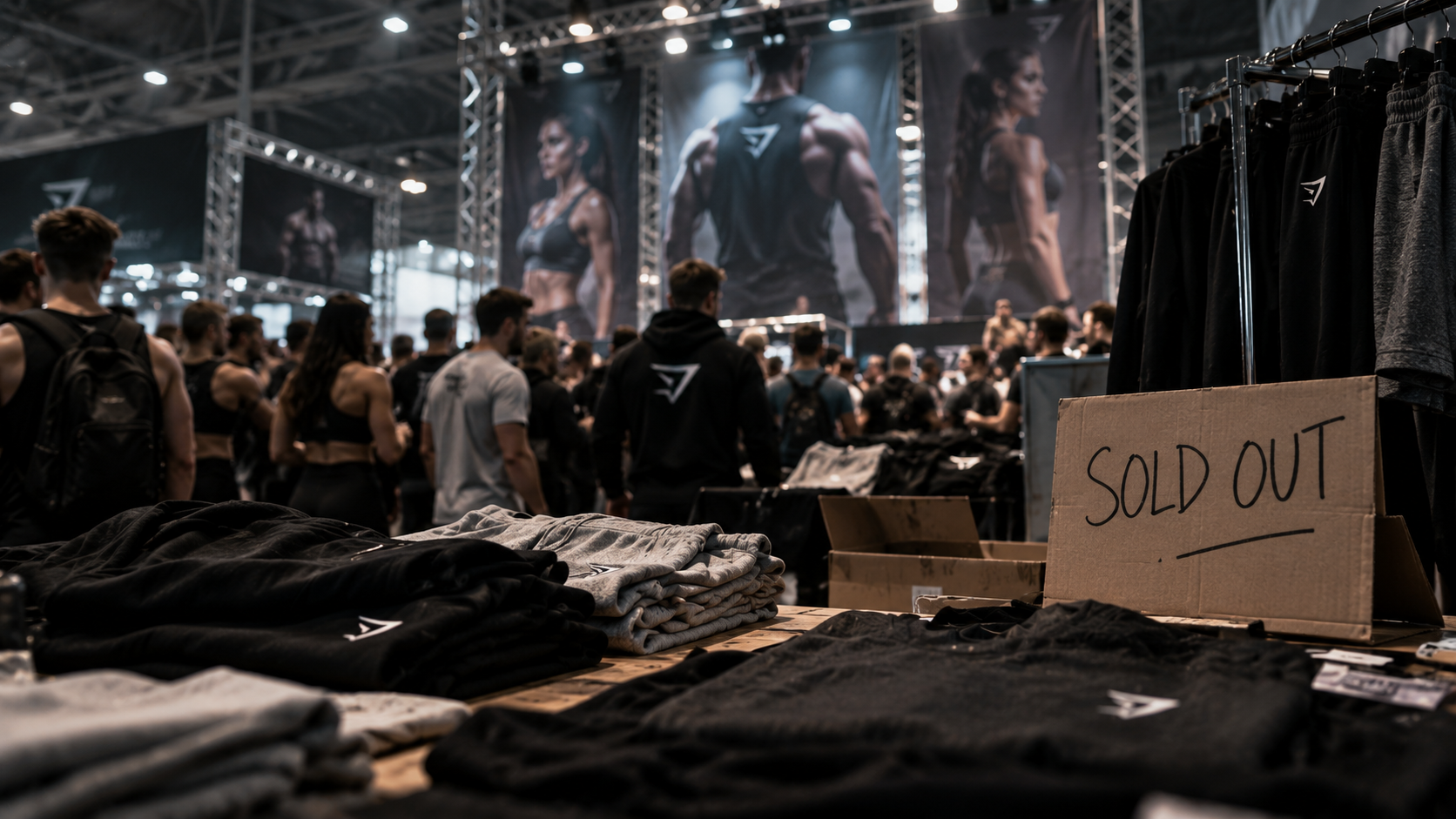
Everything changed at the BodyPower Expo in Birmingham later that year. Gymshark sold out its stock on day one, and a tracksuit went viral on Facebook mid-show, taking the business from roughly £300 a day online to £30,000 in sales within 30 minutes.
Growth from there was steep and largely self-funded: revenue climbed from £103 million to £176 million between the 2018 and 2019 financial years, then to around £258 million by July 2020, without outside investment. By 2018, Gymshark had outgrown the garage and moved into a Solihull headquarters. That apparel arm, built on direct sales, is the seed of the Gymshark business model that still shapes how Gymshark makes money today.
The 2020 General Atlantic stake sale
Gymshark sold its first external stake in August 2020, when US growth equity firm General Atlantic invested £200 million for 21% of the business, valuing it at more than £1 billion (PwC, which advised on the deal, put the transaction at approximately $1.45 billion). It made Gymshark only the second British company to reach unicorn status without prior outside backing.
Francis's stake rose to more than 70% at the time. Co-founder Lewis Morgan exited his remaining shareholding entirely as part of the deal (PwC Corporate Finance) a clean break after building the brand from that Bromsgrove garage eight years earlier.
The deal changed who owns Gymshark on paper; it didn't change the underlying way Gymshark makes its money. General Atlantic wired its £200 million just as Covid shut every gym in Britain, and Gymshark leant harder into its online strength rather than retreat. The direct-to-consumer core of the Gymshark business model held up through lockdown in a way a wholesale-dependent rival's might not have.
Who owns Gymshark today
Ben Francis has been the reported majority owner of Gymshark since 2020, holding more than 70% at the time General Atlantic took its 21% stake. Anyone typing "who owns Gymshark" into Google in mid-2026 is arriving mid-story; the picture has moved since then and is shifting further right now.
The corporate structure has since been reorganised into a restructured holding arrangement rather than the exact 2020 shareholding split. What hasn't changed, per Financial Times reporting from 2026, is that Francis's economic stake is still reported at around 70%. In July 2026, the FT reported Francis was in talks with General Atlantic to buy back part of its stake, which would push his ownership higher.
Sources said he'd considered buying the entire holding but is more likely to settle for a partial buyback, and is talking to banks about financing (Forbes, Drapers, Benzinga). No price or completion date has been confirmed, and both companies have declined to comment.
For now, the answer to who owns Gymshark is still Ben Francis, as majority owner with the prospect of owning more if the buyback goes through.
Why profit fell on purpose in 2026
Gymshark's pre-tax profit fell by around 41% in FY25 to roughly £7 million (£6.9m in the underlying filing), down from £11.9 million the year before. Revenue still climbed to a record £646 million, up 6.4% and Gymshark's thirteenth consecutive year of growth. Adjusted EBITDA rose by a double-digit percentage to £53.3 million, gross margin held at 62.3%, cash stood above £37 million, and inventory sat above £117 million.
Ben Francis, in a video shared ahead of the results, called the lower profit intentional "laying down the foundations for future growth" and the company attributed it to continued reinvestment, including its expanding store network and free community events.
(Source: Companies House filing, via SGI Europe. The EBITDA margin is roughly 8% distinct from the 62.3% gross margin.)
It's not the first Gymshark profit fall to follow a store-opening push: profit dropped roughly 39% in the year to July 2022, when the Regent Street flagship opened and US distribution centres came online, even as revenue rose 21%. The pattern holds Gymshark opens the retail throttle, a profit fall tends to follow, and revenue keeps climbing regardless. It's not the obvious way to answer how Gymshark makes money, but it's a consistent one.
Community and influencer marketing as the growth engine
Gymshark built its early audience largely through in-person community-building and creator partnerships rather than traditional advertising. Francis has described how, after trade shows, his team would train alongside people they'd just met in sessions that turned into online followers almost by accident. "All the people that we lifted with would follow us on Facebook," he told Vogue in 2022. "Those exact locations are now our biggest community hubs, among our millions of followers."
That instinct became a structured creator programme: #Gymshark66 runs a minimum weekly posting requirement for partnered athletes, alongside long-running Lift events that turn followers into in-person crowds. At the time of writing, the brand's main Instagram account sits at around 8 million followers, with a further 1 million on its dedicated lifting account (Instagram, live profile data). Community and creator partnerships appear to do much of the heavy lifting, with advertising playing a smaller role than at most apparel brands this size.
That same instinct now underpins the stores and events strategy which is, in the end, a fair summary of how Gymshark makes money: sell direct, invest in community, reinvest heavily, repeat.
FAQs
1. Is Gymshark still private?
Yes. Gymshark remains a privately held company with no stock market listing. It files annual results with UK Companies House rather than issuing public investor updates, which is why detailed financials only surface once a year (SGI Europe).
2. How much is Gymshark worth?
Gymshark's last publicly announced transaction valuation was in 2020, when General Atlantic invested £200 million for a 21% stake at a valuation of more than £1 billion (PwC put the transaction at approximately $1.45 billion). There's no newer, publicly disclosed funding-round valuation since then.
3. Does Ben Francis still own Gymshark?
Francis has been reported as holding a majority stake of more than 70% since 2020, and remains CEO. The corporate structure has since been reorganised, but 2026 Financial Times reporting still puts his economic stake at around 70%, with talks under way to potentially buy back part of General Atlantic's holding.
Also Read: Who's Behind The Growth Equity Funds Backing the UK
Sources: General Atlantic's 2020 investment announcement, PwC Corporate Finance's deal summary, Gymshark's Companies House filings via SGI Europe and Drapers, and reporting from the Financial Times (via Forbes, Drapers, Benzinga), TheIndustry.fashion and Wikipedia.
The EP+ Editorial Desk covers UK startups, founder stories, and venture capital. All editorial content is independently produced and human-reviewed before publication.


