

A handful of British firms are already earning quantum revenue. Most of the industry is still waiting its turn.
We've lost count of how many quantum computing events we've sat through this year promising that the UK's moment has finally arrived. This spring the government put a number behind the promise, pledging up to £2 billion toward what the Treasury has taken to calling the UK's "Quantum Leap".
It's the kind of figure that writes its own headline, but what we wanted to know, once all the noise settled, was much simpler:
Who is actually being paid for quantum work today, and who is still being funded to get there eventually?
Old Money, New Shape
The UK's quantum computing companies didn't suddenly appear this year. The National Quantum Strategy, published back in 2023, had already committed £2.5 billion over a decade, and that money built the research base behind names most of our readers will recognise - Riverlane, Oxford Quantum Circuits, Quantum Motion.
What's changed with this year's package is the shape of the spending,with just over £500 million earmarked for scaling companies chasing general-purpose machines, a further £400 million or so is going toward sensing and navigation, with £205 million ring-fenced for quantum sensing specifically, and £125 million more for quantum networking.
For what looks like the first time, the money aimed at sensing is starting to rival the money aimed at building bigger processors.
That split matters more than the headline number, because it points at something the sector doesn't say plainly enough: computing and sensing are running at two entirely different speeds, even though most coverage still talks about "quantum" as one story.
Computing and Sensing Are No Longer the Same Story
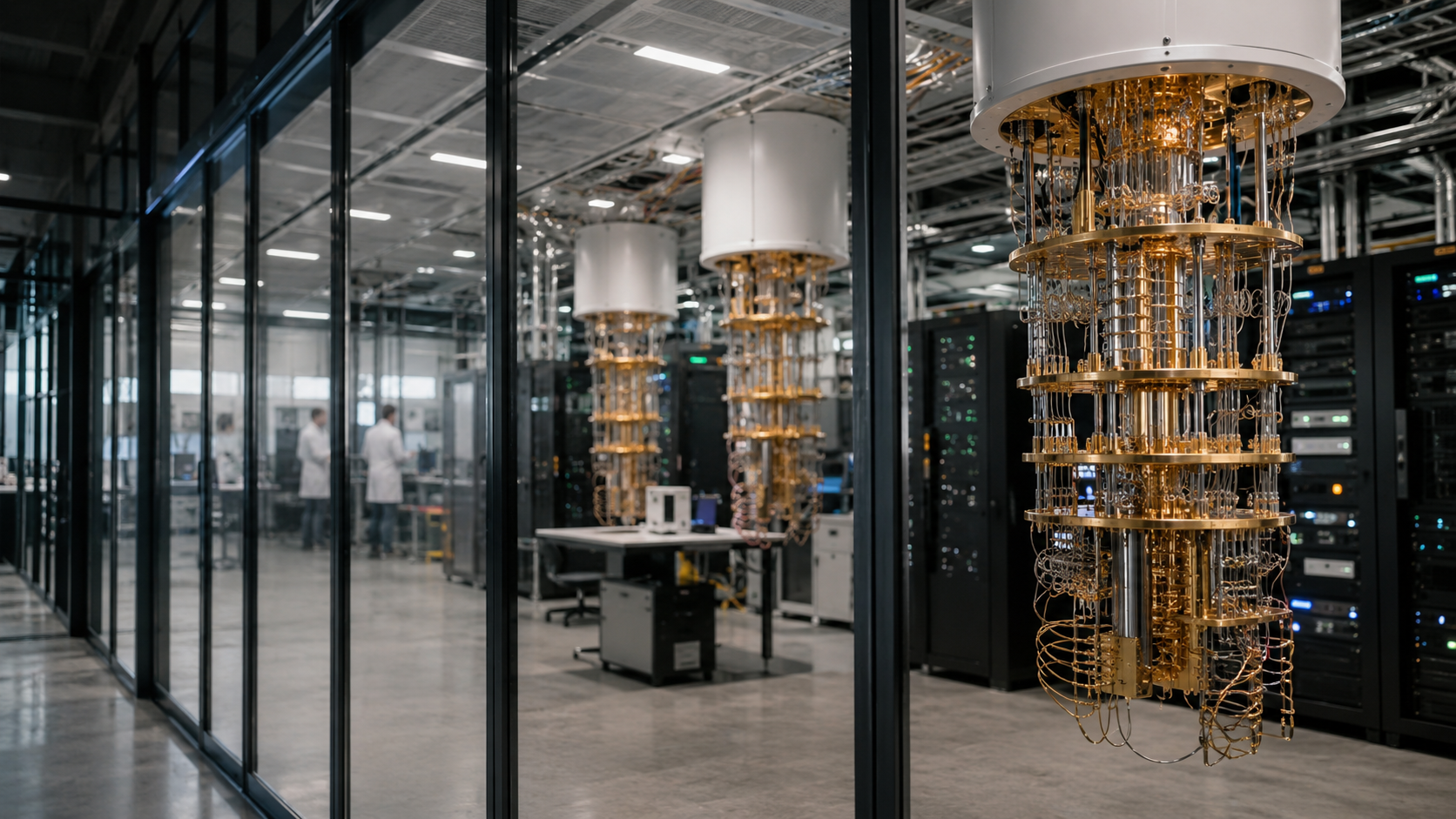
Fault-tolerant quantum computing is capable of solving problems no ordinary machine can touch, but, by most credible estimates, it remains years away from broad commercial use. Cambridge's Riverlane is a good example: the company has spent close to a decade building Deltaflow, which is a system meant to catch and correct the errors that plague every quantum processor built so far, and it works with the majority of the world's quantum hardware makers to do it.
That's a genuinely useful piece of infrastructure, but it's infrastructure for a future that hasn't arrived yet, not a product customers are buying to solve today's problems. Riverlane's own research this year found the number of published error-correction papers had more than tripled in a year, alongside a warning that the field faces a shortage of thousands of specialists it will need before that future is remotely close.
That's a company thriving on promise and not on invoices.
Most of Britain's best-known quantum computing companies are in a similar position, which is exactly why the National Quantum Computing Centre at Harwell exists: somewhere for hardware to prove itself on real testbeds before any customer is asked to pay for it.
The Companies Already Selling Today
Take Glasgow's M Squared, the company has spent close to two decades selling lasers and sensors into research and industrial markets, and its optical systems now sit inside the vast majority of the world's working cold-atom experiments, which happens to be a supplier to the whole field and not a bet on any single architecture winning out.
Or, consider Aegiq, a Sheffield spinout that has already run a live quantum sensing trial on BT's fibre network and worked separately with the Royal Navy on route planning.
That's paid pilot work, the kind most companies further up the quantum computing ladder haven't yet secured. Bristol's KETS Quantum Security tells much the same story, building quantum key distribution into defence and telecoms infrastructure that customers are buying today, not in some hoped-for 2030. Between them, these three firms sketch a rough house style for the sensing side of the sector: sell something that already works into a market that already exists, and let the harder physics catch up later.
Where Public Money and Private Capital Part Ways
None of which is to say the computing side lacks ambition, or reward, Oxford Ionics' acquisition earlier this year, reportedly worth over a billion dollars, was the largest exit any UK quantum computing venture has produced to date which is proof that patient capital in this space can pay off spectacularly when the science and the buyer line up, but an exit of that scale is also a reminder of how much of quantum computing companies' value is still realised through acquisition and speculative valuation, rather than through customers paying to use the technology today.
Private investment into the sector has actually slowed this year against 2025's pace, even as public money has scaled up.
The Department for Science, Innovation and Technology's own language around the package is telling here, whether or not it was meant to be. The announcements talk about helping firms "scale" and "develop new uses," not about products already in customers' hands. Government money, by its nature, can afford patience that private investors increasingly can't; it can fund a decade of hardware development without needing a return next quarter. Sensing and communications firms haven't needed that same patience, because they found paying customers first.
What the UK Still Has to Decide
This leaves us with a question that we don't think anyone at the National Quantum Computing Centre, in Whitehall, or in the venture community has fully answered yet. Is Britain's approach to this technology, as it's currently funded and discussed, really two separate industries sharing one label - a mature, revenue-earning quantum sensing and security business, and a still-speculative computing business running on public patience and acquisition upside?
And if that's the shape of it, should the next generation of quantum computing companies be funded and judged on the same terms, or on very different ones?
We suspect the answer will come from where the next round of Quantum Leap contracts land, not from the announcement itself.
Also read: UK Travel Technology 2026: Why the Sector Is Back and Where Smart Founders Are Building
Sources:This piece draws on UK government announcements and departmental publications (GOV.UK, the Department for Science, Innovation and Technology), industry body analysis from techUK, funding and company data from Beauhurst, sector reporting from The Quantum Insider, UKTN and QuantumZeitgeist, and Riverlane's own 2025 quantum error correction research. Figures on the Oxford Ionics acquisition are drawn from trade press coverage rather than a confirmed disclosure from either company, and are presented accordingly. This piece is purely based on secondary research.


