

Well, a few Londoners already have, with a licensed driver watching. We think the Alex Kendall Wayve story began with a 25-year-old Cambridge PhD student who bet against the entire self-driving industry.
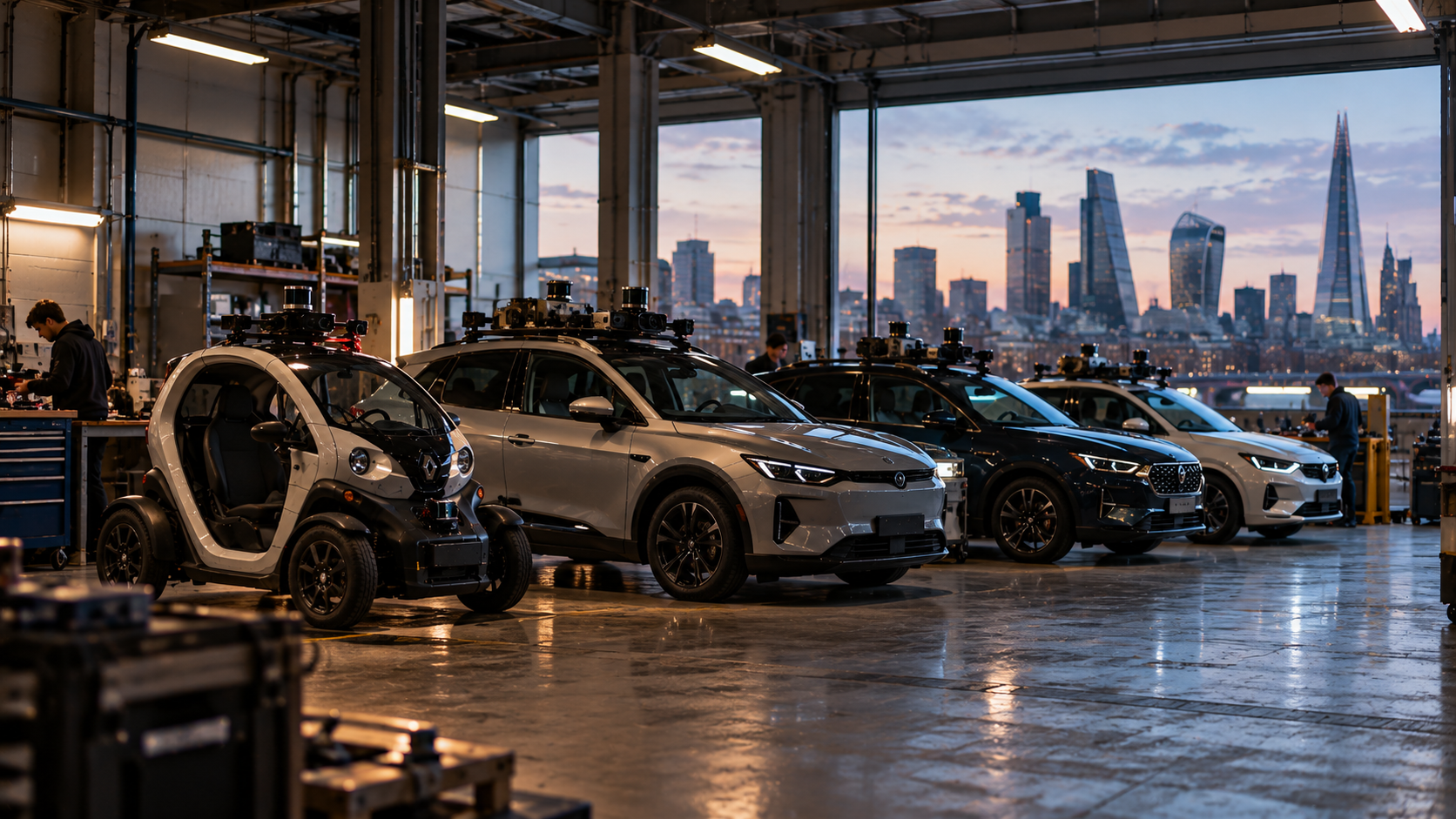
Alex Kendall bought a Renault Twizy while he was still writing his thesis, the Twizy happens to be a cheap electric two-seater. Kendall then rents a house near the University of Cambridge, then gathers a few lab mates and sets out to teach the Twizy to drive itself.
He was merely 25, he had never managed anyone, let alone raised venture capital, and that is where the Alex Kendall Wayve story starts.
The industry he was challenging had been at it for years, as Waymo had spent nearly a decade on the problem. Tesla, Uber and GM's Cruise had poured tens of billions of dollars in between them.
Every serious rival is built the same way: separate software for seeing, predicting and planning, propped up by HD maps and hand-written rules. Kendall thought that was the wrong road.
We believe the Alex Kendall Wayve bet came down to a single idea: one neural network, learning to drive from experience, the way a person does.
Rivals Called It Naive While Some Called It Reckless.
The reaction was a bit harsh.
Rivals argued the approach was unsafe and said so in blog posts, and going by Kendall's own account, he was laughed out of the room at a meeting of self-driving companies. The pitch was a hard sell to an industry that had already made up its mind.
The technique has a name, which is called end-to-end deep learning.
Wayve now sells it as AV2.0, a form of embodied AI that learns from what it sees instead of following a rulebook. Nvidia, being one of the prominent investors, promotes the same idea as well.
Tesla has since moved towards an end-to-end design of its own.
Five Cars Against Millions of Miles
What followed was a slog.
Tesla and Waymo had actually driven millions of miles, and Wayve had five cars.
Talent was really hard to attract, because most experts had written the approach off. The company spent about five years on unglamorous work, including data pipelines, training methods, edge cases.
Uber and Apple, meanwhile, walked away from self-driving. Set against giants, the Alex Kendall Wayve fleet was just five cars.
So we think that irony is worth sitting with, since Uber is now the way Londoners reach a Wayve car.
“I never for a moment doubted that I was right.”— Alex Kendall, Wayve CEO
Why He Picked the Hardest City First
Waymo began testing in a suburb of Arizona, with wide boulevards and dependable weather, but Wayve moved into London, with its narrow streets, roundabouts, cyclists and fog. The company says it has trained its AI on the capital's roads since 2018., therefore Kendall's logic was to master the hardest place first and let everywhere else feel easy.
Investors bought it, SoftBank led a $1.05bn round in 2024, with Microsoft and Nvidia alongside. A $1.2bn Series D in February valued Wayve at $8.6bn, and now Nissan is due to fit its driver-assistance software from 2027.
The Alex Kendall Wayve bet, once dismissed, now has some of the largest names in technology and motoring behind it.
“…our home city and one of the most complex driving environments in the world.”— Alex Kendall, co-founder of Wayve, at the London launch, 3 September 2026
The Driver Is Still There
On 3 September the cars reached passengers, with Londoners requesting an UberX, Uber Electric or Uber Comfort can now be matched with a Wayve-powered Ford Mustang Mach-E at the usual fare. A driver licensed by Transport for London sits inside to oversee every kind of trip.
We found that the permit covers 15 vehicles, with more than 140,000 people having opted in for a chance at one. Wayve CEO Alex Kendall posted that the team completed more than 100 trips on the first day.
These are the first self-driving taxis London riders can hail, and none is driverless. The Automated Vehicles Act 2024 will eventually let self-driving taxis London firms run with nobody on board, but it does not take full effect until the second half of 2027.
Until the Automated Vehicles Act is fully in force, the licensed driver stays.
Reporting suggests separate approval to run without a safety driver is unlikely this year, and neither company's launch announcement named a date for the driver's departure. Waymo, owned by Alphabet, is testing in the capital too, with humans on board.
The gap between the valuation and the fleet really interests us, and we think it is the real story.
A company valued at $8.6bn is asking London to trust it with 15 cars and a licensed driver in each. We found no public figure yet for how often those drivers have had to take over, and we believe that number will matter more than any launch statement.
“I think Londoners are going to love autonomous driving.”— Alex Kendall, Wayve CEO, in an interview at Wayve's London workshop
Kendall spent his early years being told the approach could never be made safe. Now the people who will decide are ordinary Londoners, one supervised ride at a time.
What will they need to see before the driver gets out?
What We’d Still Like to Ask
We would like to ask Alex Kendall how often the safety drivers have had to step in on London's roads, and what result would let him take the driver out.
We would like to know what the five-car years felt like from the inside, and what he says now to the rivals who dismissed him, and we would like to hear how a licensing model that depends on carmakers squares with an $8.6bn valuation.
Editorial Note
This piece draws on public interviews, court reporting and company records.
We welcome any additional context, corrections, or first-hand perspectives from anyone with relevant knowledge of this story.
Also read: Why the UK Robotics Industry Is Backing AI Over Humanoid Robots
Sources: Wayve and Uber launch press release, 3 September 2026 (wayve.ai; investor.uber.com); Wayve Series D announcement, 25 February 2026, and extension announcement, 15 April 2026; SoftBank Vision Fund feature interview with Alex Kendall, February 2026; TechCrunch coverage of Wayve, 2018, 2025 and 2026; Understanding AI, December 2025; Alex Kendall’s post on X, 4 September 2026; Companies House officer records for Wayve Technologies Ltd (company number 10924127); Time Out London, 3 September 2026; Londonist explainer on robotaxis in London, September 2026; Technology Magazine, September 2026; a wire report on Barchart carrying the Kendall interview at Wayve’s workshop; Department for Transport material via GOV.UK.


