

Investors put more money into UK agricultural technology in 2025 than in any year on record; £367m flowed into the sector, comfortably ahead of the previous high of £261m set in 2023.
Then 2026 opened quietly, and just about £47.8m landed in the first quarter, which is a fraction of the pace that defined the year before it.
That gap sounds particularly striking to us.
Is British agricultural technology sector cooling off after its best year ever, or is this simply how AgriTech funding always looks in January, before the bigger late-stage rounds land later in the year?
Either way, the scale of what's built up behind that number is very much real.
There are now 250 active agricultural technology companies operating in the UK, up from just 52 a decade ago, a near fourfold increase, and unlike some tech categories that spike and stall, this one has grown quite steadily.
Somewhere between 21 and 26, new companies have launched every year since 2018, through downturns and booms alike.
We're not talking about a speculative bubble, we're talking about a sector that has quietly built real depth.
Where the money is actually going
Three clusters are absorbing most of the capital, and they tell a story about what investors think farming needs next.
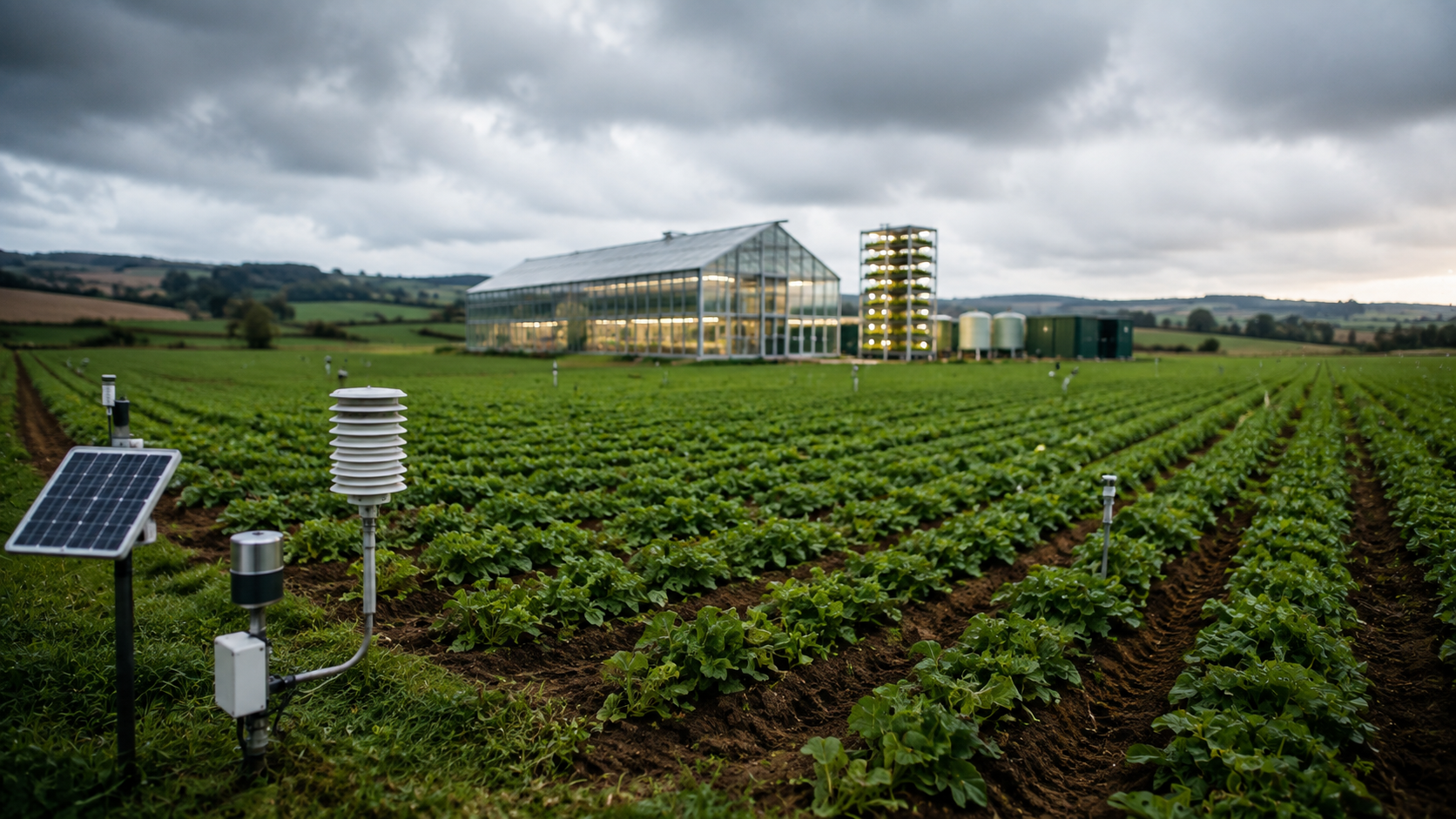
The first is controlled-environment agriculture with vertical farming, hydroponics, and indoor growing systems that promise food production without the unpredictability of British weather. Intelligent Growth Solutions, Fischer Farms, and LettUs Grow all sit among the sector's best-funded companies. The economics of growing food indoors, at scale, without soil or sunlight, are still being proven out, but investors keep writing cheques for vertical farming.
The second is gene editing and plant science, and it's where the single largest headline of the past year sits.
Tropic, the Norwich-based agricultural biotech firm, closed an oversubscribed $105m Series C in March, co-led by Forbion and Corteva, to scale its gene-edited banana and rice varieties.
The round came with a striking detail: demand for Tropic's non-browning, longer-shelf-life bananas is already outstripping what the company can supply ahead of full commercial rollout. That's a rare thing in agricultural biotech – a technology moving from lab promise to market pull.
The third is carbon and sustainability tooling, and it's arguably the cluster with the clearest commercial logic behind it. Agricarbon, a Dundee-founded soil carbon measurement company, raised £9m in Series A funding in a round led by Shell Ventures, with Barclays' climate investment arm also participating. Its technology measures soil carbon stocks at an industrial scale, letting farmers turn verified carbon data into a saleable asset.
That two of the world's largest energy and banking groups are funding a Scottish soil-testing startup says something about where corporate demand for verified environmental data is heading. Loamin and CycleØ sit in the same cluster, working respectively on satellite-informed carbon monitoring and converting agricultural waste into energy.
The gap the money doesn't close
Here's where the picture starts getting more complicated: most of this agricultural technology capital is landing in R&D-intensive categories – biotech, vertical farming infrastructure, and carbon measurement science. Far less of it is going toward the unglamorous software layer that most working farmers actually touch on a Tuesday morning: the tools for recording spray applications, tracking livestock movements, and filing compliance paperwork.
That's not really a small gap.
UK farms report losing meaningful chunks of their working week to administrative tasks - often re-entering the same data across multiple disconnected systems, once for agronomy compliance and again for a government subsidy portal. Add in patchy rural connectivity, and the practical reality of running a farm in 2026 doesn't always match the sophistication of what's getting funded.
Policy is pulling hard in the other direction, though, and it's arguably the real explanation for why capital keeps arriving. Defra's Sustainable Farming Incentive was overhauled for 2026. The offer was trimmed from 102 actions to 71 and a new £100,000 annual agreement cap - a simplification the department says will let more farms participate, even as it caps what the largest claimants can draw down.
Alongside it, the Farming Equipment and Technology Fund is offering £50m this year, split across three themes – farm productivity, animal health and welfare, and slurry management, with individual grants ranging from £1,000 to £25,000 per theme.
It's a competitive fund, so applying doesn’t always guarantee receiving anything, but every pound of public money tied to demonstrating environmental or productivity outcomes is a pound that makes AgriTech's pitch to investors a little more compelling.
A question worth asking
We don't think 2026's slow start is a verdict as of yet, as late-stage rounds have a habit of clustering later in the year, one quiet quarter doesn't undo a decade of steady company formation.
Still, it does raise a fair question for anyone watching the space: has UK agricultural technology built genuine commercial demand strong enough to sustain investor appetite at 2025's pace, or was last year's record more a reflection of a handful of exceptionally late rounds landing all at once? Whether the Sustainable Farming Incentive reforms and funds like the Farming Equipment and Technology Fund are enough to keep private capital confident is very much still an open question.
We'll be watching where the rest of 2026's capital lands across UK agro and whether any of it starts flowing toward the compliance and connectivity problems that sit between the labs and the fields.
Also read: UK Space Tech Startups: The Sector That's Finally Ready for Commercial Takeoff
Sources: Beauhurst ("Top 100 Agritech Companies in the UK", April 2026, updated weekly); Tropic company press release (12 March 2026); TNW reporting on Tropic's Series C (May 2026); Agricarbon company press release (December 2023) and Barclays Sustainability case study (November 2025); Defra Farming Blog and GOV.UK guidance on the Sustainable Farming Incentive 2026 offer and Farming Equipment and Technology Fund 2026; ADAS and edie reporting on Defra's 2026 SFI reforms.


