

Tim Spector spent decades studying twins, and ZOE grew out of that work.
The idea was simple: if two people with almost identical DNA can react differently to the same food, then one-size-fits-all diet advice was never going to work.
Turning that idea into a business has been harder. ZOE has changed its product, slashed its price and kept going while still losing money.
So how does ZOE make money? We worked from reports of its Companies House accounts, its investor pitch and its own price pages, and we flag anything we couldn’t verify.
Who Is Behind ZOE? The Founders and the Science
Professor Tim Spector, Jonathan Wolf and George Hadjigeorgiou founded ZOE in 2017, spinning it out of Spector’s research at King’s College London.
The science came first.
Wolf says Spector’s work began about 30 years ago with 13,000 twins, in what became TwinsUK.
The commercial experience came from the other two. Wolf previously held a Chief Product Officer role at Criteo. Hadjigeorgiou co-founded efood, which was acquired by Delivery Hero in 2015, and later led HouseTrip before its acquisition by TripAdvisor.
The pandemic made ZOE a household name. Its Covid symptom app had 4.7m users at its 2021 peak, the company told Sifted.
How ZOE Makes Money: The Three Revenue Streams
ZOE generates revenue primarily through app memberships, Gut Health Test purchases linked to an active membership, and Daily30 supplement subscriptions. That is the company’s own description, from its October 2025 Crowdcube pitch.
The same pitch says over 70% of revenue between June and August 2025 came from recurring subscription-based memberships. It also reports 88,000 paying members that August, of whom more than 23,000 subscribed to Daily30. We could not verify these figures independently.
Daily30 costs £45 for a month or £133 for four months.
Food products add another route to sales: ZOE sells a Gut Health Bar, listed at £28 for a box of 12 (checkout prices vary by purchase option), and has retail partnerships.
Marks & Spencer (M&S) launched a ZOE gut shot in early 2024, and Waitrose began stocking Daily30+ later that year. We found no separately disclosed revenue figures for either partnership.
ZOE’s Revenue Model: From Test Kits to Subscriptions
ZOE’s revenue model shifted from a £299.99 test kit plus a £24.99 monthly fee to a £149 gut test plus a £9.99 monthly membership.
The old kit included blood tests and a continuous glucose monitor.
ZOE subsequently removed these additional tests and introduced a simplified Gut Health Test.
Its current personalised nutrition platform uses predictive algorithms and data from more than 300,000 microbiome profiles to provide personalised food recommendations.
The company said the changes reduced short-term revenue in pursuit of longer-term plans.
Before the change, revenue leaned on that expensive first purchase.
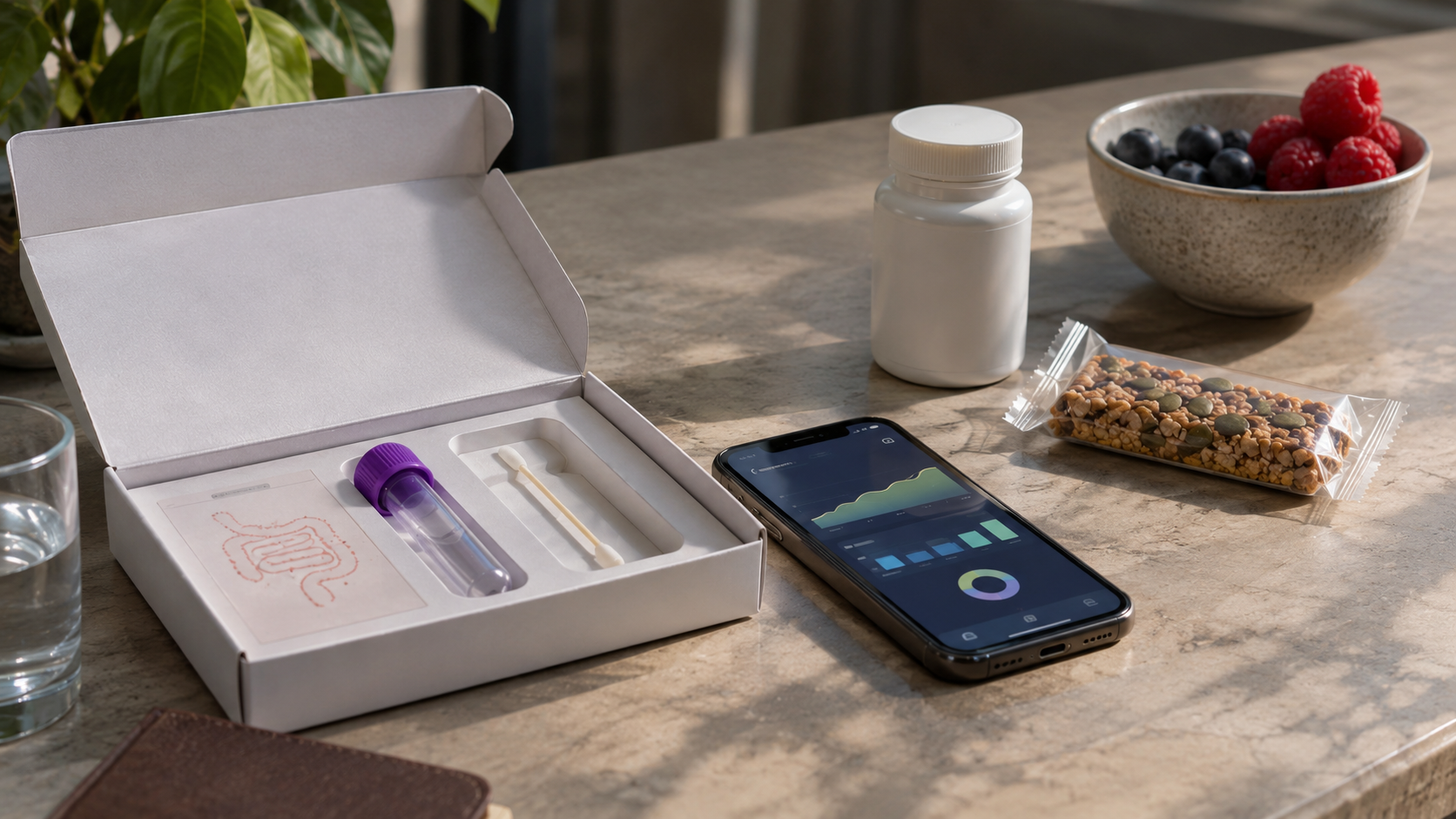
Now the test is sold only with a membership, so the subscription comes first.
The ZOE revenue model traded a high entry price for a low one. Founders will recognise the move: cut the barrier, chase growth, accept a revenue dip.
ZOE Business Model: Pricing, Margins and the Move to a Cheaper App
The ZOE business model now pairs a £9.99-a-month app with a £149 gut test and Daily30 subscriptions priced well above the app.
Current UK prices:
- App membership: From £9.99 a month on a 12-month app-only plan (£119.88 in total).
- Gut Health Test: £149 when purchased through ZOE's membership page. A separate product page lists the test at £199, so the applicable checkout price should be confirmed.
- Daily30: £45 for a one-month subscription or £133 for four months.
- Gut Health Bar: Listed at £28 for a box of 12, although the final price varies by purchase method and shipping.
Margins are the gap. We could not find a published gross margin, a Daily30 revenue figure or any unit economics, so we cannot say which product earns most.
Food adds its own risks. ZOE wrote down £704,000 of short-shelf-life food inventory in the year to August 2025, and the ASA upheld a ban on a Daily30+ ad claiming it was “just real food”.
ZOE Funding Round by Round: Who Has Backed the Company
ZOE says it has raised $118m to date, with backers including Accomplice, Balderton Capital, Coefficient Capital and thousands of retail investors on Crowdcube.
The latest ZOE funding round targeted £1m and passed £3m within two weeks from more than 3,300 investors, at a £266m pre-money valuation shared with investors (The Grocer). It is unclear whether the $118m total includes it.
Not everyone was convinced.
Leo Campbell, co-founder of Modern Baker, called the raise more symbolic than substantive, citing a £266m valuation and £1m monthly burn. The burn figure is his, not ZOE’s.
Revenue, Losses and the Churn Problem
ZOE is not profitable on its latest accounts: it lost more than £20m in the year to August 2025 as revenue fell from £66.1m to £34.1m.
Revenue climbed from £1.8m to £66.1m in three years, then nearly halved. Membership revenue fell from £27.7m to £17.4m in 2025, and headcount dropped by a further 139.
Churn is the other problem.
In an October 2023 interview, Spector told Sifted that about half of users stay only six to nine months. We found no published current retention rate, so we cannot say whether the cheaper plan fixed it. The real test is whether members stay.
What Other Founders Can Learn from ZOE
ZOE shows founders that a cheaper entry price trades revenue for reach, retention decides whether a subscription works, and community can be capital.
Price is a lever, not a verdict: Cutting the monthly fee from £24.99 to £9.99 coincided with revenue nearly halving. The model only pays if members stay far longer.
Retention is the model: Spector’s estimate that half of users leave within six to nine months shows why the business needs repeat payments more than kit sales.
Community can be capital: Crowdcube’s co-CEO said the 2025 ZOE funding round showed community advocacy turning into investment.
So, how ZOE makes money today: app and Daily30 subscriptions, a gut test sold with membership, and a new snack bar, with a loss it has yet to close.
Also Read: How Does Zego Make Money? The Insurer Built for Gig Workers
FAQs
1. How much does ZOE cost?
ZOE’s UK app membership costs from £9.99 a month on a 12-month plan (£119.88 in total), and the Gut Health Test is £149, sold only with a membership. Daily30 costs £45 for a month or £133 for four months (zoe.com, November 2026). Before the 2025 cut, the monthly fee was £24.99 and the kit £299.99 (The Grocer).
2. Is ZOE profitable?
No. ZOE lost more than £20m in the year to August 2025, close to double the previous year’s loss, on revenue of £34.1m. Its next accounts, for the year to August 2026, are due by 31 May 2027, so there is no newer figure yet.
3. Who founded ZOE?
Professor Tim Spector of King’s College London, Jonathan Wolf and George Hadjigeorgiou founded ZOE in 2017. Wolf is chief executive and Hadjigeorgiou is president.
Sources: Companies House (ZOE Limited filing history); The Grocer; City AM; The Guardian and The Observer; Sifted; Maddyness; AgFunder News; Pulse 2.0; Endeavor Greece; ZOE (zoe.com, Crowdcube investor pitch and zoe.com/invest). Figures reflect the most recent available data at the time of writing, 16 November 2026.
The EP+ Editorial Desk covers UK startups, founder stories, and venture capital. All editorial content is independently produced and human-reviewed before publication.


