

Nine centers, £1.6 billion in backing, and a network now being asked to prove it belongs in a rebuilt Innovate UK
Picture a founder somewhere outside Newcastle, three years into building a sensor for offshore wind turbines, she doesn't need a government scheme, what she needs is a wind tunnel, or a rig that can simulate twenty years of saltwater corrosion in twenty weeks, or an engineer who's already solved the exact problem keeping her up at night.
What is a Catapult to a founder like her?
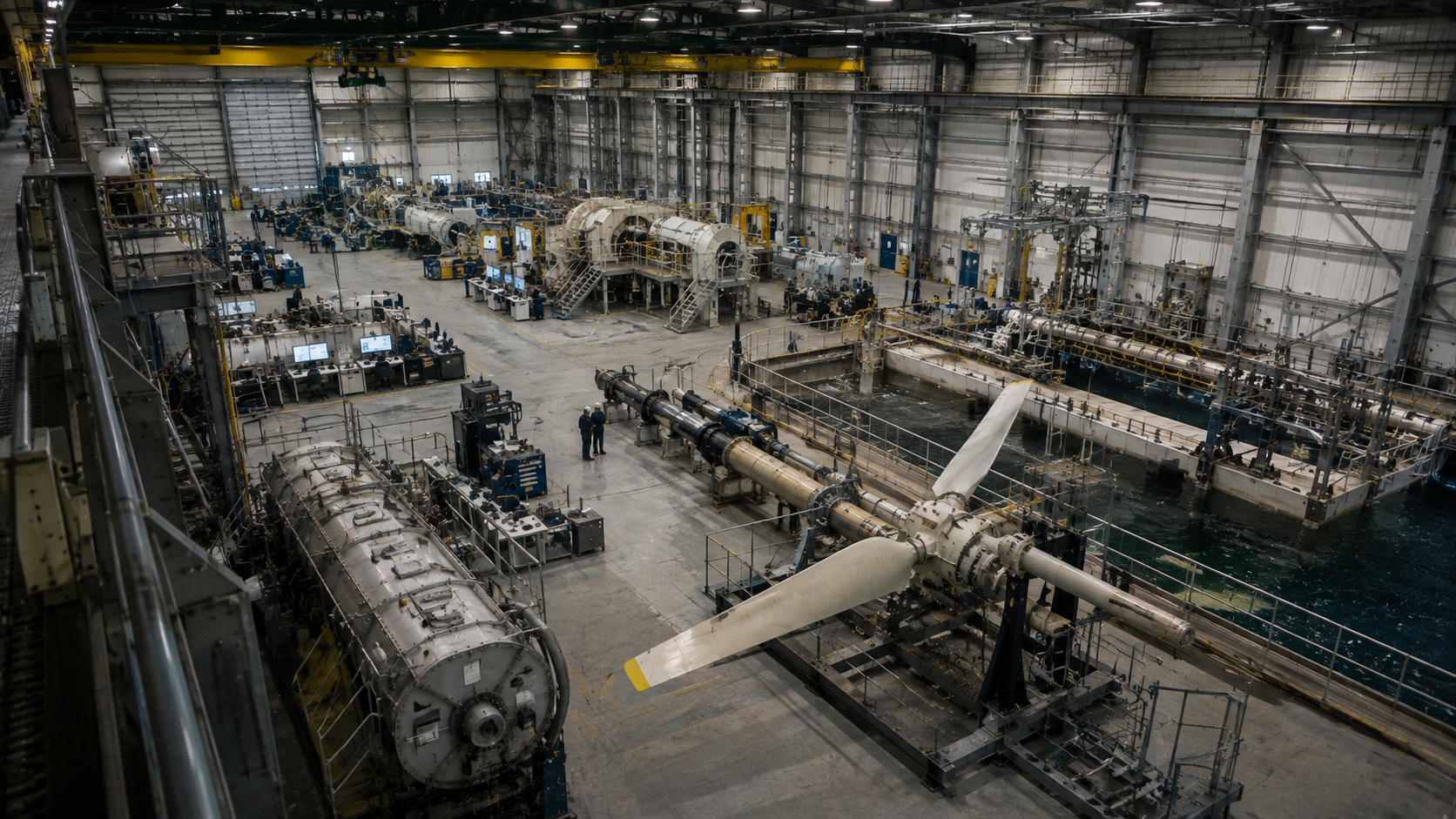
Probably nothing, until the day she finds out the UK already built exactly what she needs - in a converted paper storage shed in Blyth, Northumberland, and gave it a name straight out of a medieval siege.
That's the first thing worth knowing, nobody sets out looking for a Catapult, they stumble into the idea sideways, usually after months of trying to solve a facilities problem on their own.
So, what is a Catapult, in practical terms?
A not-for-profit innovation centre, set up by Innovate UK, built to give businesses access to specialist R&D facilities, equipment and expertise they couldn't justify building themselves.
Nine Centres Built for Problems Startups Can't Solve Alone
There are nine Catapult centres, each built around a different frontier - cell and gene therapy, compound semiconductors, connected places, digital technology, energy systems, high value manufacturing, medicines discovery, offshore renewable energy, satellite applications.
Between them, these Catapult centres run more than 60 sites, from that Blyth shed to a compound semiconductor packaging facility in Newport that simply didn't exist anywhere in the country before 2024, this idea dates back to 2011: launch British technologies further and faster than they'd travel on their own.
Fourteen years later, that's still roughly the pitch and by the network's own count, it's now worked with close to 12,000 SMEs along the way, all backed by Innovate UK funding.
Catapults Aren't Grants, So Where Does the Money Go?
Here's where it gets interesting, though, whatever a Catapult is, it isn't a cash machine,if you ask for money, you'll be pointed towards the door just as quickly as any other funding body - because Catapults themselves aren't sitting on a pile of innovation grants UK founders can simply apply to.
Innovate UK funding underpins the whole network, but it doesn't flow to founders directly through the Catapults, the £1.6bn Innovate UK has committed to the network for 2023 to 2028 splits roughly into thirds: a core government grant, industry money, and collaborative R&D funding that Catapults have to go out and win, competing for the same innovation grants UK founders are chasing themselves.
Which, oddly, works in a founder's favour - a Catapult that needs to win those bids has every reason to bring good SMEs along for the ride rather than shut them out. It also explains why so much of what a Catapult offers arrives as vouchers, cohort programmes and co-funded pilots rather than a straightforward cheque. The High Value Manufacturing Catapult alone is working with £167m of core funding for 2026-27.
How Startups Actually Get Access
Understanding what is a Catapult like day to day matters more than the definition on paper, lets take Frontier Technical, an engineering outfit down in Plymouth, it had developed MARLIN, a floating foundation system for offshore construction, but couldn't afford its own testing, consenting advice and technical analysis. An ORE Catapult support voucher, funded through Innovate UK Business Growth, covered exactly that gap.
Up in Northern Ireland, Rubik Technologies won a similar prize after pitching through Digital Catapult's Manufacturing Innovation Challenge - a £75,000 grant jointly awarded by Techstart Ventures and Digital Catapult, to push its data platform further than its own budget would stretch.
Neither company knew what a Catapult was before they needed one either, both walked away with facility access and funding that would have taken years to build alone and neither route started with a form, it actually started with a conversation: High Value Manufacturing Catapult, for one, begins every engagement by sitting down with a business and working through the actual problem before anyone talks about facilities. Digital Catapult runs its own cohort programmes on top of that - its Digital Twin Adoption Accelerator currently offers UK-wide founders up to £100,000 in grant funding alongside nine months of hands-on support.
For most founders, the practical starting point sits one step earlier than any individual Catapult: Innovate UK Business Growth, the advisory service that connects eligible SMEs into the network in the first place.
Eligibility isn't complicated on paper, so a UK-registered trading company with up to 250 employees and a genuinely innovative product or service is enough to get a conversation started, but knowing to ask, knowing what is a Catapult before you need one, is still the hardest part of the whole process, but say our wind-sensor founder isn't near Newcastle at all, say she's in Cornwall, or Belfast, or anywhere that isn't already sitting inside one of these clusters.
The Geography Problem: Who Actually Gets Access?
That's where the story gets less tidy since catapult sites don't spread evenly across the country but they cluster around existing strength: compound semiconductors in South Wales, offshore energy in the North East and Scotland, manufacturing across the Midlands and Yorkshire, satellite technology out of Leicester and Oxfordshire, and life sciences threaded through London, Stevenage and Edinburgh.
The government's own line is that this is deliberate, not an oversight, since Catapults go where the industrial capability and research excellence already exist, not where a map of the UK suggests they should. Defensible, maybe, if you're already inside one of those clusters, but it is still a genuinely long drive for founders who aren't.
A Network About to Change Again
The ground keeps shifting too, which raises the question of what is a Catapult even going to look like in a year. In March 2026, Innovate UK published a new strategic prospectus, signalling a move towards backing fewer businesses more deliberately, aligned to a shortlist of Industrial Strategy sectors.
The Catapult Network survived that reshuffle intact, explicitly named a "national asset.", but UKRI has also confirmed it's actively reviewing the Catapult portfolio, with decisions on any structural changes due within the year.
Which means the answer to what is a Catapult, and how many of them there are, is accurate as of today and not guaranteed to still look this way by the time anyone's read this twice.
Do Catapults Actually Help Startups Grow?
Innovate UK's own evaluation found SMEs working with Catapults grow 50% faster than similar businesses that don't.
That's a strong case for picking up the phone, but what's harder to answer is whether a founder outside the existing hub regions gets a genuinely fair shot at that growth once the portfolio narrows towards a smaller set of priority sectors.
We don't think that question has an answer yet, and maybe it shouldn't, this early into a review that's still underway.
Also read: Inside The Race To Rebuild UK Wealth Management Technology
Sources: UK Research and Innovation; Research Professional News; Catapult Network Office; UKRI (Facility Directory and Delivery Plan 2026–27); ORE Catapult; Digital Catapult; Sync NI; High Value Manufacturing Catapult; Innovate UK Business Growth.


